
Narrative Warfare
AI, influence operations and the strategic struggle over perception
Narrative warfare is not simply the spread of false information. It is the deliberate shaping, steering and distortion of perception through coordinated stories, repeated framing, selective amplification, synthetic content and strategic manipulation of the information environment.
Artificial intelligence is making that process cheaper, faster and more adaptable.

The Secretary Who Never Called: An AI Impersonation at the Top of Statecraft
September 7, 2026
warrier.ai covers narrative warfare as the intersection of AI, influence operations, strategic persuasion, propaganda systems and digital information conflict.
The focus is on how synthetic media, generative text systems, automated content pipelines and platform amplification can be used to push agendas, reinforce narratives, flood public discourse and erode confidence in shared reality.
Narrative warfare is not always about one dramatic lie. Often it works through accumulation: repeated framing, emotional reinforcement, synthetic legitimacy, coordinated repetition and the gradual normalization of distorted or manipulative narratives across multiple channels.
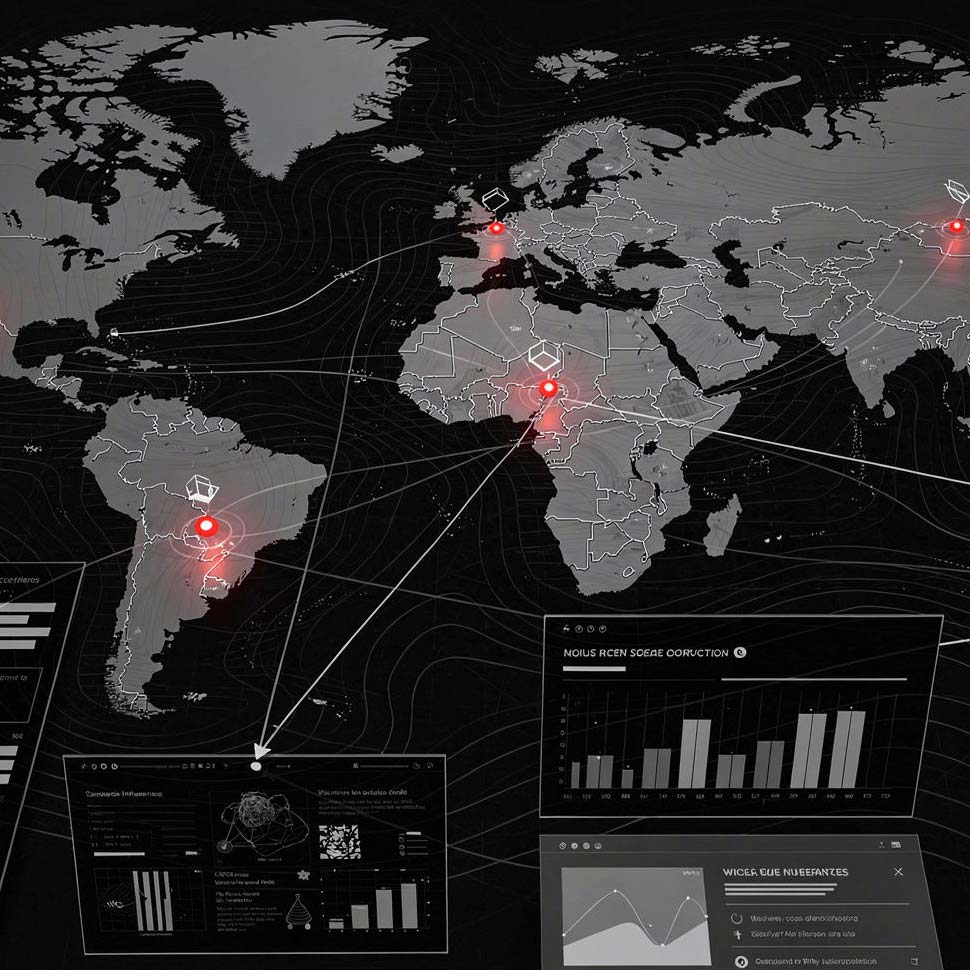
What Warrier covers in narrative warfare
Warrier’s narrative warfare coverage focuses on the strategic use of AI to shape interpretation, steer attention and manipulate the terms through which events are understood.
This includes AI-assisted influence operations, synthetic propaganda, coordinated narrative amplification, agenda-shaping content systems, automated persuasion campaigns and the use of generative media in geopolitical information conflict. Warrier also examines the role of platforms, recommendation systems and engagement incentives in helping manipulative narratives spread further, faster and with lower production costs.
The emphasis is not only on the message itself, but on the architecture around it: who is trying to shape perception, through which channels, with what synthetic tools, toward which strategic objective and under which conditions of amplification.
The aim is not to label every online disagreement an information war. It is to examine the cases where AI meaningfully expands the reach, speed or strategic utility of narrative manipulation.
Why narrative warfare matters
Narrative warfare matters because control over perception often matters before control over facts.
If enough content can be generated, repeated and distributed quickly enough, it becomes possible to shape what feels plausible, what feels contested, what feels urgent and what feels true — even before the underlying claims are settled. AI strengthens that capability by lowering the cost of content generation, multiplying narrative variants and making coordinated persuasion easier to sustain.
The result is not just more propaganda. It is a more volatile information environment in which public understanding can be pushed, fragmented or destabilized at lower cost and greater speed. Narrative warfare is therefore not a metaphorical concern. It is a practical struggle over attention, interpretation and trust.
It matters not only in geopolitics, but anywhere perception can be manipulated for advantage: elections, reputational attacks, culture conflicts, coordinated outrage campaigns, strategic disinformation or the slow erosion of institutional credibility.
What Warrier looks for
Warrier’s narrative warfare coverage pays close attention to the actors, systems and incentives behind narrative manipulation rather than treating each campaign as a purely content-level problem.
That means examining the strategic use of synthetic media and AI-generated messaging, the relationship between platform amplification and influence operations, the role of repetition, flooding and agenda-shaping, and the ways in which generative systems reduce the cost of persuasion, narrative testing and coordinated informational pressure.
The question is not whether narratives exist. They always have. The question is how they are being engineered, weaponized and industrialized in the age of AI.
Explore briefings, dossiers and case files on AI-assisted influence operations, synthetic propaganda, coordinated narrative campaigns and the strategic use of artificial intelligence in information conflict.