
Warrier Case Files
Documented incidents in deepfake abuse, AI-enabled fraud, synthetic deception, disinformation and digital manipulation.
Warrier Case Files focus on concrete incidents: documented cases of deepfake abuse, AI-enabled fraud, synthetic deception, disinformation campaigns, platform failures, influence operations and other events that reveal how artificial intelligence is being used to manipulate trust, distort information or scale harm.
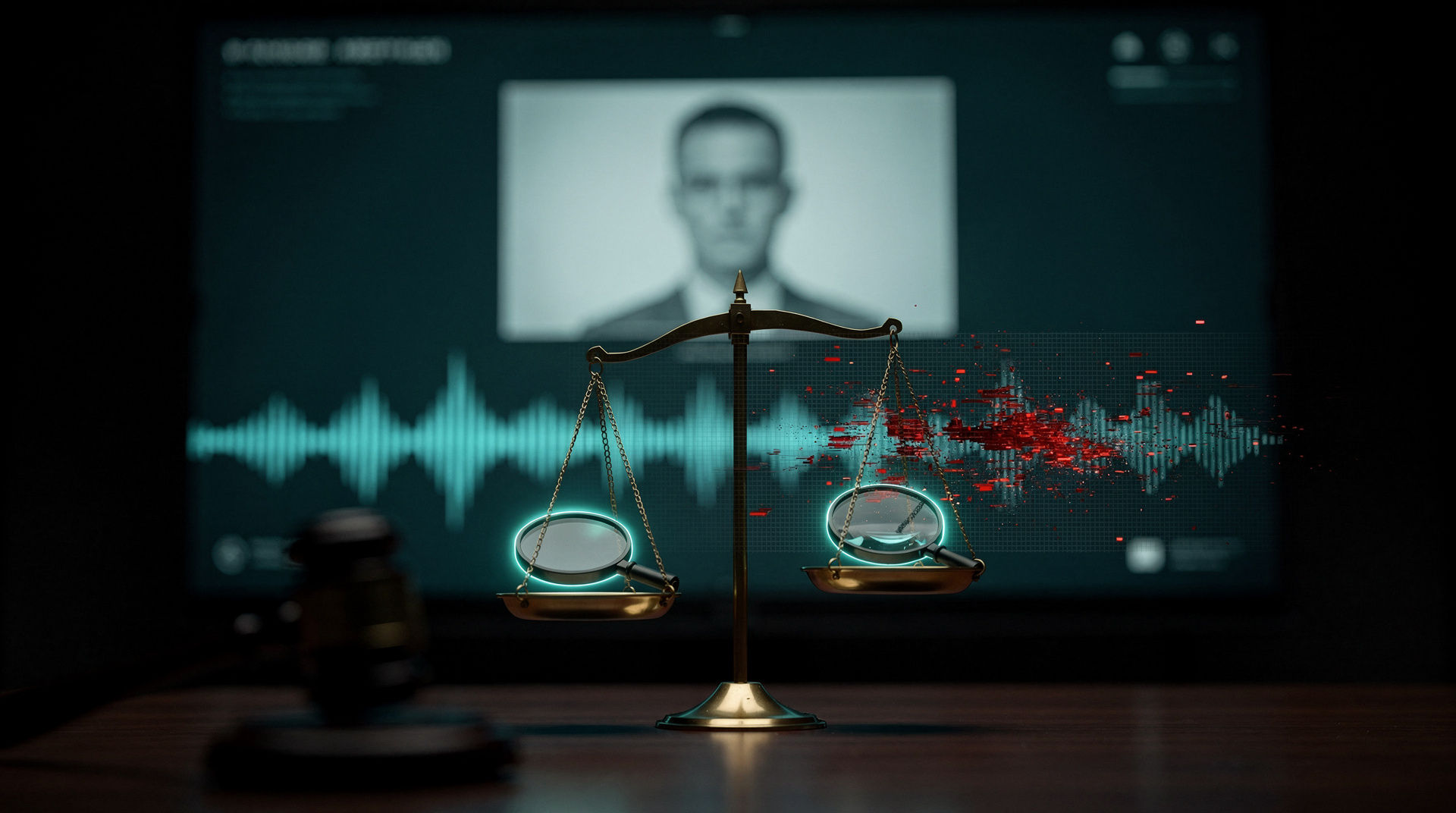
Prove It’s Fake: The Deepfake Trial That Couldn’t
The Secretary Who Never Called: An AI Impersonation at the Top of Statecraft
The Mask That Slipped: Beating Live Video Verification to Steal a Legal Identity
The $15 Identity: Inside OnlyFake, the AI Fake-ID Factory
Love, by the Manual: Inside a Deepfake Romance-Scam Ring
The Question That Broke the Deepfake: How Ferrari Beat a Cloned CEO
Documented incidents in the hostile use of AI
Where Warrier Briefings interpret emerging developments and Warrier Dossiers map broader systems, Case Files are built around the documented anatomy of a specific event.
A Case File asks a narrower but equally important set of questions: what happened, who was involved, what tools or tactics were used, what evidence exists, what remains uncertain and why the case matters beyond its immediate details.
The purpose is not only to archive incidents, but to examine them closely enough that they become analytically useful. A well-structured case can reveal recurring tactics, platform vulnerabilities, fraud patterns, synthetic media methods and institutional blind spots that might otherwise remain hidden behind a single headline.
Case Files, Briefings and Dossiers
Each Warrier format serves a different purpose.
Briefings
Briefings focus on important developments, emerging patterns and structured editorial assessment.
Dossiers
Dossiers map broader systems, infrastructures, recurring tactics and strategic shifts across multiple incidents.
Case Files
Case Files focus on one concrete incident at a time and examine it as a documented event with analytical value.
Together, these formats allow warrier.ai to move between signal, structure and evidence.

What a Warrier Case File does
Case Files are designed to turn individual incidents into usable intelligence.
Document the event
Each Case File starts with a concrete event, campaign, fraud case, manipulated media incident, influence operation, platform failure or synthetic deception pattern that can be documented through credible reporting, available evidence or other verifiable material.
Reconstruct the mechanics
A Case File looks at how the incident worked: what was fabricated, impersonated, distributed, automated or manipulated; what role AI played; and which tactics, tools or channels appear to have been involved.
Clarify what is known
Not every case is fully visible from the outside. Warrier Case Files aim to distinguish between documented facts, credible reporting, unresolved claims and analytical inference as clearly as possible.
Identify the larger relevance
A Case File does not treat an incident as a curiosity. It asks what the event reveals about larger patterns in AI-enabled fraud, deepfake abuse, platform governance, synthetic influence or the economics of deception.
Build a searchable record
Warrier Case Files contribute to a growing editorial archive of incidents that can be revisited, compared and connected over time. The goal is to build a more durable record of how synthetic threats materialize in practice.

What Warrier Case Files cover
Case Files may focus on incidents involving:
- deepfake video, synthetic audio or voice cloning
- AI-assisted fraud, impersonation and social engineering
- synthetic identities and fabricated online personas
- disinformation campaigns and manipulative content operations
- AI-generated scams, fake recruiters or deceptive commercial schemes
- platform failures involving synthetic media or coordinated manipulation
- politically relevant influence operations and narrative interventions
The emphasis is on documented incidents that help illuminate the mechanics and consequences of AI-driven deception.
The Warrier Case File structure
Most Case Files are organized around a core set of questions.
What happened?
What is the documented event, case or campaign? When did it occur and who was involved or affected?
What role did AI play?
Was AI used to generate content, clone a voice, fabricate identity, automate outreach, amplify manipulation or otherwise enable the event?
What evidence exists?
What reporting, documentation, screenshots, recordings, public statements, platform actions or other material help establish the case?
What remains unclear?
Which claims are unresolved, disputed or weakly evidenced? Where should interpretation stop short of certainty?
Why does the case matter?
What larger pattern, vulnerability, tactic or structural risk does the incident reveal?
Public Case Files and members-only Case Files
warrier.ai may publish selected Case Files publicly where the issue warrants broad visibility. But deeper Case Files may sit inside the members area, especially where the value lies in more extensive documentation, stronger pattern mapping, recurring updates or a fuller analytical layer.
Public Case Files surface the event. Members-only Case Files examine it more deeply.
Why Case Files matter
The manipulative uses of AI often become visible first through individual incidents: a deepfake used for fraud, a cloned voice deployed in a scam, a synthetic identity built for deception, a disinformation network amplified through AI-generated content.
Taken alone, these events can look isolated. Examined closely, they often reveal something larger.
Warrier Case Files exist to make those larger signals visible by documenting the event with enough precision to show how it worked, why it matters and what it may foreshadow.