
Deepfakes
Synthetic media, fabricated identity and the erosion of trust
Deepfakes are one of the most visible and destabilizing expressions of AI-driven deception. What began as a niche manipulation technique has rapidly evolved into a broader ecosystem of synthetic video, cloned voices, fabricated identities and AI-generated media designed to imitate reality closely enough to exploit trust.
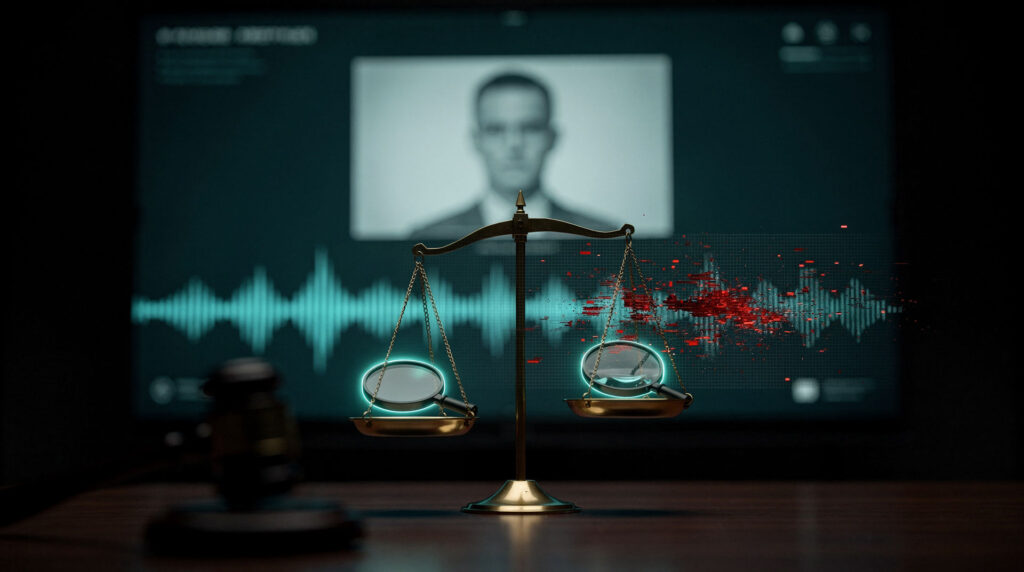
Prove It’s Fake: The Deepfake Trial That Couldn’t
September 18, 2026
warrier.ai covers deepfakes not as a novelty story, but as a structural threat.
The issue is no longer limited to fake celebrity clips or isolated viral hoaxes. Deepfakes now intersect with fraud, impersonation, extortion, political manipulation, reputational attacks and strategic influence. Synthetic audio can be used to impersonate executives, public figures or family members. AI-generated video can be deployed to fabricate events, undermine credibility or create confusion in already fragile information environments. Synthetic personas can be built to deceive, persuade or infiltrate.
The deeper problem is not simply that fake media exists. It is that the cost of producing persuasive falsehoods is falling, the quality of synthetic output is improving and the surrounding digital environment is often poorly equipped to verify, contextualize or contain the damage.

What Warrier covers in deepfakes
Warrier’s deepfake coverage focuses on the hostile and manipulative uses of synthetic media, including:
- deepfake video used for fraud, impersonation or reputational harm
- cloned voices in executive scams, extortion or deceptive outreach
- synthetic identities designed to mislead, manipulate or gain trust
- AI-generated media used in political influence, propaganda or narrative distortion
- platform failures in the detection, moderation or containment of synthetic media abuse
- the wider collapse of verification norms in environments saturated with AI-generated content
The aim is not to catalog every synthetic clip on the internet. It is to focus on the incidents, patterns and infrastructures that reveal how deepfakes are becoming part of a broader trust crisis.
Why deepfakes matter
Deepfakes matter because they change the economics of deception.
They lower the cost of impersonation. They make falsehoods easier to produce at scale. They allow fraudsters, propagandists and manipulative actors to fabricate realism without needing access to the person, event or institution they are imitating. They also erode trust in authentic media by making uncertainty itself easier to weaponize.
In that sense, deepfakes are not only a media problem. They are also a fraud problem, a governance problem, a platform problem and a strategic problem.
The challenge is not just whether a particular video or voice recording is fake. It is whether digital environments built on speed, virality and weak verification are capable of withstanding a growing flood of synthetic identity and synthetic evidence.
What Warrier looks for
Warrier’s deepfake coverage pays close attention to the mechanics behind synthetic media abuse, the incentives driving it and the vulnerabilities it exploits.
That means examining how deepfakes are operationalized in fraud, disinformation, reputational sabotage or strategic influence; how platforms and distribution channels amplify or fail to contain them; what financial, political or strategic incentives sit behind a deepfake campaign; and whether a given case reflects an isolated incident or a repeatable pattern likely to expand.
Deepfakes are not important because they are technically impressive. They are important because they are becoming operationally useful — and because they reveal how easily trust can be manufactured, manipulated or broken in a synthetic media environment.
Explore briefings, dossiers and case files on synthetic media abuse, voice cloning, fabricated identity, deepfake fraud and the wider trust failures emerging in the age of AI-generated content.